With its 2025 announcement that it would discontinue cloud support for its popular SoundTouch multiroom series, Bose has shot itself in the foot. The long-established U.S. manufacturer faced criticism not only from the hi-fi community but also from business-oriented media. The Handelsblatt summed up the mood with the pointed headline “Smart Bose speakers are getting dumb.”
The shutdown (effective May 6, 2026) has now been implemented, and there was a massive outcry from many users—a firestorm that Bose could hardly use at this point. After all, the company recently underscored its ambitions in the premium segment with the acquisition of renowned high-end brands like McIntosh and Sonus Faber, and just one day earlier launched the new Bose Lifestyle collection, which targets a similar user group.
The situation is particularly explosive because SoundTouch was once positioned as a serious multi-room platform to rival Sonos, and had incorporated truly innovative features into its products—such as the integration of numerous streaming services into its own app and the use of preset buttons. Many customers deliberately invested in multiple speakers for different rooms so they could control them centrally via a single app. Against this backdrop, the shutdown hits even harder—especially since the user base is already on edge following the recent turmoil surrounding Sonos, older device generations, and incompatible apps. For owners of older streaming and multi-room systems, this further shakes their confidence in cloud-based audio platforms.
For Bose SoundTouch owners, all of whom are affected by the discontinuation of cloud features, there are two options: continue using the speakers as Bluetooth or Wi-Fi adapters, or hope for future apps that can at least partially replace the cloud features. Bose has published the documentation behind the features for developers and the open-source community, and is hoping for third-party providers to step in, similar to what Logitech did with its Lyrion (LMS) streaming platform.
The Bose SoundTouch multiroom system was introduced in 2013 and relied heavily on a cloud-based architecture from the very beginning. Key functions were deliberately moved out of the speakers and handled via Bose’s own cloud servers and the proprietary SoundTouch app. These included, in particular, access to streaming services, management of preset buttons, and access to internet radio services.
The manufacturer has not explained in detail why Bose is now shutting down the SoundTouch servers. In similar cases, however, experts often assume that either the underlying server and cloud hardware is no longer economical or secure to operate, or that necessary security and operating system updates can no longer be reliably implemented. It should be noted that these issues do not affect the local hardware of the Wi-Fi speakers themselves—which further exacerbates the frustration of many users.
Bose has explicitly ruled out any new development or modernization of the SoundTouch cloud. The manufacturer had already officially discontinued the platform in 2020, just about seven years after its launch and a few years after major product updates. This makes the situation all the more problematic for buyers, as Bose SoundTouch devices were produced until 2020 and are still being offered on marketplaces as NOS or used goods.
Bose SoundTouch 10
Bose SoundTouch 20 (Series III)
Bose SoundTouch 30 (Series III)
Bose Wave SoundTouch Music System (IV)
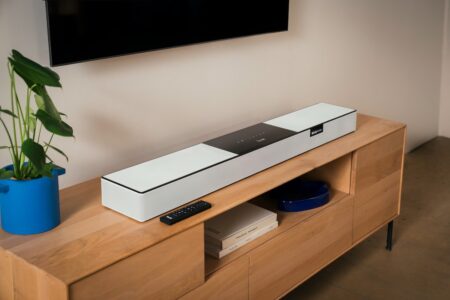
Bose SoundTouch Soundbar 300
Bose Lifestyle Serie (z.B. 135, 235, 525 etc.)
Bose CineMate-Serie (z.B. 120, 130, 220)
Bose Lifestyle SoundTouch Serie
As well as all devices with “SoundTouch” in their name, including zone amplifiers, etc.
Important to know: All Bose wireless speakers introduced after 2020—including all Bose models ever tested by STEREO GUIDE—as well as devices that are Bluetooth-only, are not affected by the shutdown! This also applies to Bose Home Speaker 500, Home Speaker 300, Portable Smart Speaker, Bose Soundbar 600 und Bose Solo 5.
Bose has not released any new products based on the SoundTouch architecture since 2020. Nevertheless, many devices continued to be sold secondhand or as clearance stock and remained in active use. According to Bose, the associated cloud servers can no longer be operated securely, which is why the manufacturer has decided to shut down the internet services.
Originally, the SoundTouch cloud was scheduled to end on February 18, 2026—without clear guidelines on which features would remain available afterward. In the worst-case scenario, users would have had only Bluetooth and a separately selectable AUX input at their disposal.
Bose has since finalized and implemented the schedule: As of May 6, 2026, the final deadline, all cloud-based SoundTouch services were shut down via an update to the SoundTouch app. According to the manufacturer, limited, purely local use of the devices via available protocols and connections will still be possible from this date onward.
First, some good news for all users who are worried that their SoundTouch product will not only become “dumb” but also silent starting May 6, 2026: The update announced by Bose will at least allow for basic local playback capabilities to continue. Even after the cloud services are shut down, the following protocols and connections will remain available:
• Bluetooth
• AirPlay
• Spotify Connect
• Analog AUX inputs, HDMI, and optical Toslink, if available on the respective device
In addition, basic system functions are also expected to remain intact. These include setting up the Wi-Fi connection, basic configuration, and pairing multiple units for multi-room applications. Simple remote control functions such as Play, Pause, and track skipping will also continue to work—similar to classic Bluetooth or AirPlay speakers without their own streaming platform.
However, all cloud-based services within the Bose SoundTouch app will be shut down. This includes, in particular, direct access to streaming services, internet radio, and the management and reassignment of preset buttons.
According to Bose, these presets will be permanently frozen starting May 6, 2026, and cannot be changed thereafter. Cloud-based presets, such as internet radio or Spotify playlists, will likely no longer be accessible either.
The features being disabled are said to include stereo pairing of two mono SoundTouch speakers, which, according to our research, will only affect users of the SoundTouch 10.
Laut Hersteller wurde das finale Update für Bose SoundTouch App am 06. Mai 2026 automatisch has been rolled out, effectively reverting both the app and the device firmware to offline mode. This update disables all cloud-based services and features within the SoundTouch system and replaces the previous app with a greatly simplified control application that does not include integrated streaming services or internet radio.
After this final update to the future limited SoundTouch firmware, there will be no further updates, feature improvements, or security patches. Bose strongly recommends that the affected speakers be operated only on a closed, private network thereafter, such as behind a firewall in the router.
Even after May 6, 2026, local playback methods are expected to remain usable indefinitely. These include Bluetooth, analog AUX inputs, and optical Toslink or HDMI connections, provided they are available on the respective device. According to initial user reports, AirPlay and Spotify Connect are still expected to work, but there is no permanent guarantee of this.
Bose provides users with instructions on how to continue using individual services—such as internet radio via TuneIn—from a smartphone via AirPlay or Bluetooth. Further information and official notices can be found on the manufacturer’s website at bose.de
In addition to the ability to use standard protocols like Bluetooth, AirPlay, and Spotify Connect, third-party apps became available just a few days after the shutdown, replacing at least some of the previous controls and network functionality.
Bose has released the APIs and published details that allow open-source developers and third-party providers to step in.
So far, we’ve found two apps that are already officially available in the App Store and, at least according to user reports, are working: “Bosman SoundTouch Remote” from Kambrium and “Controller Pro for SoundTouch.” More are sure to follow.
We haven’t been able to test any of these solutions yet, but we advise SoundTouch owners to wait and see how things develop.
Software-Lösungen für Apple-Nutzer
Bose has published an “End-of-Service” user manual for operating SoundTouch devices after May 6, 2026, which we have linked here for download (German):
Offizielle Anleitung zur Connectivity von Soundtouch-Geräten von Bose nach dem 06.Mai 2026 als PDF
Bosman App iOS in the AppStore
Controller Pro iOS for Soundtouch in the AppStore
Better ST für Soundtouch for iOS in the Appstore
((Update from June 1, 2026): In response to our coverage, we just received a message from Christian Harms, who believes the solutions currently available are too complicated and thus overwhelm many owners. He describes his app “Controller for Bose SoundTouch” (App Store, $2.99), available for iPhone users, as a “low-threshold alternative” to solutions that rely on specific servers and services. It replaces the disabled Bose Cloud with a local service on the iPhone. And he promises: Internet radio and presets (including the hardware buttons on the speaker) work again, entirely on your own Wi-Fi network, without the cloud and without any server setup.
Conrtoller for Bose SoundTouch
(Update from June 7, 2026) We just received an email from Jens Roggenfelder, who told us about his hobby project, SoundTouch reborn (STR for short). The key feature of his software solution—available as apps for macOS and Windows—is that STR replaces the Bose Cloud directly on the speaker, not on your phone. You simply plug a USB drive into your SoundTouch device—using a small adapter to micro-USB for some speakers—and then you can remove the drive again. The developer promises: no additional devices, no need for a phone to be running, and no router settings required. The hardware buttons should then work again and can be programmed with internet radio and Spotify playlists. Furthermore, you can even use multiple Spotify accounts, which wasn’t possible with Bose’s own system.
STR is a free, open-source desktop app for Windows and Mac available directly from the developer. Everything www.st-reborn.de
Software-Lösungen for Android-Users
Link to third-party SoundTouch control apps already available in the Play Store for Android devices (not yet tested by us):
Bosman App in the PlayStore (Android)
Controller Pro Android für Soundtouch im Playstore
Note: This guide is updated regularly (as of June 7, 2026).